
Giving a massage that feels both intimate and respectful is part technique, part atmosphere, and wholly about listening. Whether you want to ease your partner’s tension after a long day or to create a slow, connective evening together, the goal is the same: make touch feel safe, soothing, and responsive. This guide walks you through the basics—communication, space, materials, gentle techniques, and aftercare—so you can build an experience that’s relaxed, pleasurable, and rooted in consent. Read on for practical steps, helpful lists, and a few creative ideas to keep your approach thoughtful and effective.
Why intention matters
0
Start with why. A massage becomes memorable when it’s given with the clear intention to care, not to perform. Intention shapes tone, pressure, and the pace of touch. Before you begin, take a moment to center yourself: breathe deeply, set a gentle purpose—relaxation, pain relief, or reconnection—and share that with your partner. When both of you understand the purpose, boundaries and expectations flow naturally, and the experience feels collaborative rather than transactional.
Consent, communication, and boundaries
Consent is the foundation. A short conversation before any hands-on contact makes everything easier: ask what kind of touch they prefer, whether they want a firm pressure or feather-light strokes, and what areas are off-limits. Use clear, open-ended questions like “What level of pressure feels best?” or “Are there any spots you want me to avoid?” During the massage, check in occasionally with soft prompts such as “How’s this?” and watch nonverbal cues—breathing, facial expression, or muscle tone—to adjust in real time.
Simple scripts to open the conversation
- “Would you like a full-body or focused massage?”
- “Tell me if anything feels uncomfortable or too intense.”
- “If you want more or less pressure, just say so—no explanation needed.”
These short, clear prompts respect autonomy and make it comfortable to give feedback. If the other person prefers silence, agree on a quick signal—tapping the hand, a word, or a finger squeeze—so adjustments are still possible without breaking the mood.
Setting the environment
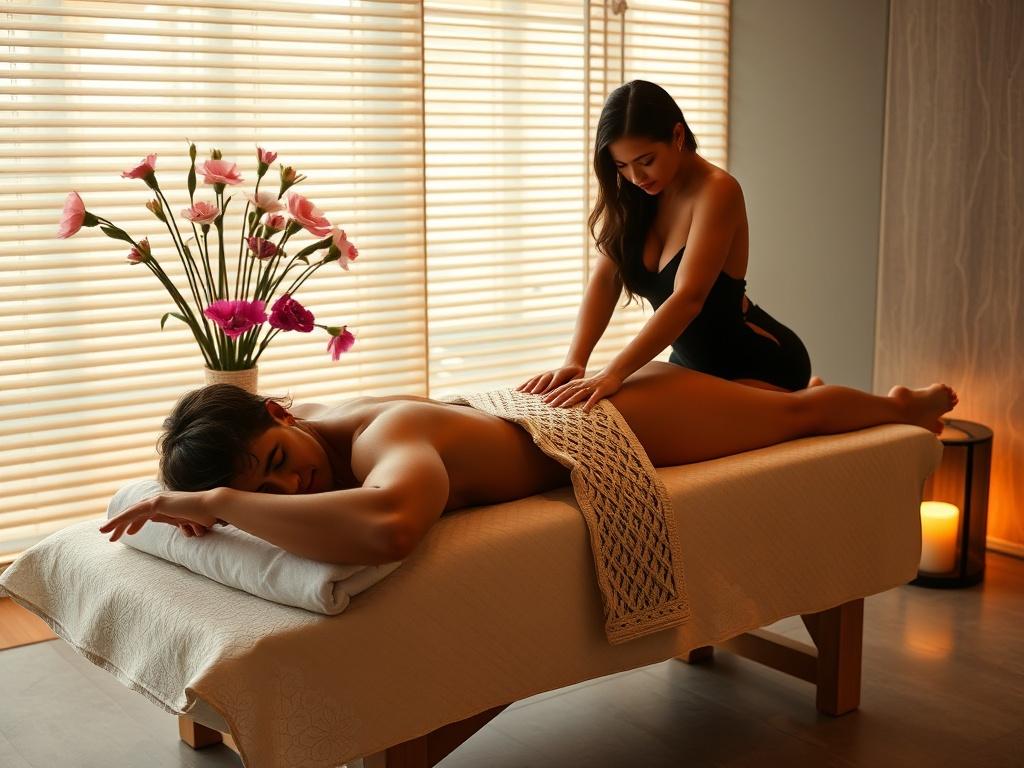
Small details make a big difference. Temperature, lighting, sound, and aroma all influence how safe and relaxed someone feels under your hands. Aim for a comfortably warm room, soft indirect lighting (lamps or candles if safe), and a clean, uncluttered space. A firm bed, massage table, or a low futon works well; avoid overly soft surfaces where the body sinks and alignment is lost.
Sound and scent: keep it simple
Music should be gentle and unobtrusive—slow rhythms, minimal lyrics, and an even dynamic range. Nature sounds or instrumental playlists are reliable choices. For scent, a light diffuser or one or two drops of essential oil blended with a carrier oil is enough. Lavender, sweet orange, and chamomile are calming; avoid overpowering fragrances that can overwhelm or trigger sensitivities.
Oils, lotions, and supplies
Choosing the right medium helps the hands glide without sticking and protects the skin. Carrier oils such as sweet almond, fractionated coconut, jojoba, or grapeseed are popular because they’re smooth, absorb at a moderate rate, and are unlikely to irritate. If you use essential oils, dilute them properly—typically 1% or less for intimate work—and patch-test if you’re unsure about sensitivities.
| Product | Scent/Feel | Best for | Notes |
|---|---|---|---|
| Sweet almond oil | Mild, slightly nutty | General full-body massage | Rich, good glide; avoid with nut allergies |
| Fractionated coconut oil | Neutral, light | Short sessions, non-greasy finish | Stays liquid; long shelf life |
| Jojoba oil | Very light, skin-like | Sensitive skin | Absorbs well; pricier option |
| Massage lotion | Varies | Less greasy, quick absorption | Good for hotter climates |
Keep towels, bolsters, and clean linens on hand. A rolled towel under the ankles or neck will increase comfort and reduce tension. If you plan to work near hair, consider using a small bowl for oil to prevent drips on bedding.
Basic principles of pressure and pacing

Pressure should flow from general to specific. Start with broad, soothing strokes that help warm the tissues and give a tactile map of the body. From there, you can refine your touch: increase pressure to coax out a knot, then soften to let the tissue settle. Match your pace to the person’s breathing—slow, deep breaths suggest they want a languid, unhurried approach; faster, shallow breathing may indicate discomfort or guardedness.
How to apply pressure safely
- Use the weight of your body rather than relying solely on arm strength.
- Keep your wrists neutral; engage larger muscle groups for sustained pressure.
- Avoid jarring or fast, repetitive thumps unless you both agree on them.
- Steer clear of bones and open injuries; focus on muscle bellies and connective tissue.
When you encounter a sensitive spot, pause and soften your touch; sometimes simply holding space lets tension release more reliably than pressing harder.
Techniques you can use right away
There’s no need to memorize complex sequences to give a nourishing massage. A few reliable techniques—gliding, kneading, compressions, and effleurage—cover most needs. These moves can be adapted for the back, shoulders, legs, and scalp. Begin each new area with gentle strokes to warm the skin and follow with targeted work where tension is present.
| Technique | How to do it | When to use |
|---|---|---|
| Effleurage (long glides) | Open-palmed, long strokes along muscle fibers | Warm-up and transition between areas |
| Kneading | Lift and roll the muscle between thumb and fingers or palm | Soften dense muscles like the shoulders |
| Compression | Press gently into a muscle then release | Help circulation and prepare for deeper work |
| Friction | Small, circular movements with thumb or pads | Break up adhesions in tight spots |
Use rhythm and repetition: a steady tempo builds trust and predictability. If you want deeper pressure, slow your pace and widen your contact area rather than applying sharper, localized force.
Working the back and shoulders
The back often holds daily stress. Start with effleurage: long glides from the lower back up toward the shoulders to warm the muscles and improve circulation. For the shoulders, use broad kneading strokes across the trapezius, moving outward from the spine toward the shoulder blade. Be cautious near the spine—apply pressure to the muscles beside it rather than on the vertebrae themselves.
Tips for releasing tight knots
- Apply moderate sustained pressure for 10–20 seconds, then soften; repeat if the person indicates relief.
- Use the heel of your hand for broad knots and thumbs for more precise work, but always ask before using thumbs on sensitive areas.
- Incorporate gentle stretching after working a knot to lengthen the muscle and promote circulation.
After spending time on the shoulders and upper back, finish with light strokes to soothe any residual discomfort and to integrate the work into the whole body.
Lower body work: hips, glutes, and legs
Tension in the hips and glutes often shows up as lower back pain or stiffness. Have the person lie on their side or stomach for access, and begin with long strokes down the thigh to encourage venous return before working the gluteal muscles. Use kneading and compressions to ease deep tissue tightness, and remember: glute work can be intensely personal—always get explicit permission before massaging these areas and respect any reluctance.
Safe leg techniques
- Effleurage from ankle to knee to hip to promote circulation.
- Knead along the calf and quadriceps using both hands in a traveling motion.
- Avoid deep pressure directly over the shin bone; focus on muscle bellies.
Be mindful of circulation issues and varicose veins—steer clear of bulging veins and consult a healthcare provider if you’re unsure whether massage is appropriate for someone with vascular conditions.
Hands, feet, and scalp: small zones, big impact
Hands and feet are rich with nerve endings and respond quickly to focused care. A short hand or foot massage can be remarkably grounding after deeper bodywork. Use thumbs to apply gentle pressure across the arch of the foot and along finger pads for the hand. For the scalp, long, slow fingertip circles can release tension and promote relaxation without needing much oil.
Mini-routine for hands and feet
- Warm the area with gentle effleurage for 30–60 seconds.
- Use thumb pressure in circular motions across the palm or sole.
- Stretch each finger or toe gently, pulling straight out and rotating slightly.
- Finish with long, soothing strokes back toward the body.
These short, attentive moves are ideal as an opener or a calm closing touch that signals care rather than arousal.
Pacing intimacy: building connection without pressure
When touch carries romantic or sensual intent, pacing becomes essential. Slow, patient hands and open communication anchor the experience in connection rather than mere stimulation. Consider beginning with neutral areas—the back, shoulders, forearms—and allow the other person to indicate interest in deeper or more intimate touch. Use breath-synchronized strokes to mirror their rhythm and deepen a shared calm.
Respecting boundaries while being attentive
- Ask permission before shifting to more sensitive zones.
- Offer the option of a short break if either person feels overstimulated.
- Keep a nonjudgmental tone; feedback should be met with gratitude, not defensiveness.
Intimacy grows when both participants feel safe to express comfort and discomfort. That honesty often makes the experience more satisfying than any preset technique could.
Common mistakes and how to avoid them
Even well-meaning givers can make errors. Rushing through the introductory strokes, using inconsistent pressure, or failing to hydrate afterwards are typical pitfalls. Pay attention to the small details: warm your hands, avoid strong scents if you don’t know preferences, and watch for cooling or tense up as clues. If your partner tenses, slow down and lighten the pressure rather than assuming the problem is lack of firmness.
Quick troubleshooting checklist
- Hands cold? Warm them in your pockets or rub them together before contact.
- Oil too slippery? Pat some away with a towel and continue with less glide.
- Partner falls asleep but you want feedback? Assume it’s positive but keep pressure gentle.
Reflect after a session—ask what felt good and what could be different next time. Continuous small adjustments improve comfort and efficacy over time.
Health and safety considerations
Certain medical conditions require caution. If someone has blood clots, recent fractures, open wounds, infectious skin conditions, or uncontrolled high blood pressure, professional medical clearance is important. Pregnant people have special needs and should avoid deep abdominal work and pressure points that might not be appropriate; consult a prenatal massage-trained therapist or medical professional.
When to recommend professional help
- Persistent, sharp pain that doesn’t respond to gentle touch.
- Signs of infection—redness, warmth, swelling—or unexplained bruising.
- Recent surgery, chemotherapy, or complex chronic conditions.
If anything feels beyond your scope, encourage a visit to a licensed massage therapist or healthcare practitioner rather than attempting aggressive techniques at home.
A simple full-session sequence
Here’s a practical, beginner-friendly sequence you can use for a 45–60 minute massage that balances warming, focused work, and soothing closure. Adjust timings to match preferences and available time.
- Set the environment (5 minutes): warm room, soft music, light oil.
- Begin with effleurage on back (5–8 minutes) to warm tissues.
- Shoulder and upper back kneading (8–10 minutes), addressing knots carefully.
- Work down the arms, hands, and then legs with alternating strokes (10–12 minutes).
- Glutes and hips if consented (5 minutes), using broad strokes and light compressions.
- Finish with scalp, neck, and face if desired (5 minutes), keeping touch light.
- Aftercare (5 minutes): allow rest, offer water, and discuss feedback.
Consistency matters more than complexity. A steady, attentive 30-minute routine will typically be more effective and enjoyable than a scattered 90-minute attempt at advanced techniques.
Aftercare and integrating the experience
Aftercare anchors the intimacy of a massage. Allow time to rest, offer a glass of water to rehydrate, and avoid abrupt transitions back into stressful activities. Gentle stretching or a quiet walk together can help the body assimilate the work. If any soreness appears in the next 24–48 hours, suggest warm baths or gentle movement and remind them that transient muscle soreness can be normal after deeper release.
What to say afterward
- “How did that feel for you?”
- “Would you like more or less pressure next time?”
- “Did any spots feel especially helpful or sensitive?”
These questions continue the conversation about needs and preferences, refining future sessions and maintaining trust.
Creative variations and ritual touches
Small rituals make the massage feel intentional. You might begin with a short shared breathing exercise to sync rhythms, use a warm compress for the neck before working there, or end with a five-minute period of side-by-side quiet so both people can absorb the calm. If you enjoy aromatherapy, a signature scent for your sessions can cue relaxation over time and enrich the sensory memory of care.
Ideas to personalize the experience
- Create a playlist you both find soothing and update it periodically.
- Rotate oils or lotions seasonally—lighter textures in summer, richer blends in winter.
- Introduce gentle stretching that the person can do themselves after the massage to prolong benefit.
These variations keep sessions fresh and emphasise that massage is a collaborative practice tailored to preferences, not a one-size-fits-all chore.
When massage becomes more than technique
At its best, massage is a language—touch speaking in a way words cannot. It communicates care, attention, and presence. That quality arises from consistent boundaries, small rituals, and the willingness to adapt. Whether you give an occasional supportive session after a stressful week or build a weekly ritual, your responsiveness and respect will be what your partner remembers most.
Resources to learn more
- Books by licensed practitioners on therapeutic touch and anatomy for non-professionals.
- Community classes or workshops that teach safe, partner-based massage techniques.
- Short online video demonstrations from reputable massage therapists—use these as visual supplements, not replacements for hands-on practice.
Hands-on feedback and supervised practice, even in informal settings, accelerate learning and reduce the risk of common mistakes.
Common questions answered
How often should you give a massage?
Frequency depends on purpose: for general relaxation, a weekly or biweekly session is lovely; for acute muscular tension, more frequent short sessions may help. Always let the recipient guide frequency based on recovery and comfort.
Is it okay to fall asleep during a massage?
Yes—sleep is a sign of deep relaxation. If your partner falls asleep, continue with softer, rhythmic strokes and finish gently so they aren’t startled awake. If you prefer active feedback, agree beforehand about whether waking for adjustments is okay.
Can I learn enough from online guides to be helpful?
Yes—basic techniques and safety guidelines can be learned online, but for deep therapeutic work or if you have medical concerns, in-person guidance from a professional is wise. Use credible sources and avoid imitating risky maneuvers without supervision.
Practical checklist before you begin
- Confirm consent and any medical considerations.
- Warm your hands and the room.
- Prepare oil, towels, and a bolster or pillow.
- Choose a playlist and minimize interruptions.
- Decide on a time limit and communicate it gently.
Having these items sorted keeps the session smooth and allows both of you to settle into the moment without logistic distractions.
Final notes on tone and presence
The technical skills are useful, but the human qualities—attentiveness, patience, and the ability to hold a calm space—matter more. Speak softly if you talk, mirror breathing, and maintain steady, compassionate touch. Over time, you’ll develop an intuitive sense of when to push a little and when to simply be present.
Conclusion
A thoughtful, respectful massage is an act of attunement that blends technique with emotional intelligence: start with clear consent, prepare a comfortable setting, choose simple, safe techniques, and stay responsive to feedback. Prioritizing warmth, patience, and communication turns touch into meaningful care, whether your aim is relaxation, pain relief, or reconnecting with a partner. Keep practicing, stay curious, and let each session teach you something new about comfort, boundaries, and the gentle power of touch.